
Sunday, May 11, 2008

Back to Moonwater
I'm back to M/moonwater - the blog and the Chinese film festival. I've let myself to be constantly at the crux of different directions for almost the past four years. Now, I've settled. Here. Now. Expect not only a much more productive mind, but also one charged with a solid, focused sight to the future, no matter daunting and at times blurry it could be. I'm no more disillusioned by false hopes, or unnecessary self-inflicted angst. I'm dancing my way to exciting ventures.
Welcome back (to me).
Welcome back (to me).
Sunday, October 15, 2006
Duende

Duende: A Journey to the Heart of Flamenco
by Jason Webster
Almost three months after I came back from China; two fiction books (Murakami's Sputnik Sweetheart and Mistry's A Fine Balance); an ounce of guilt of not writing anything worthwile on dance except a few proposals, I discovered a book which anchors on flamenco, and guided me through a whole new perpective of what I previously thought simply as another hybrid dance culture.
Flamenco, as it turns out, sounds more like Dao (Taoism). A way (of life/living). It has compás (rumba, allegria, solea, etc) with always lyrical lyrics in it and dance to express an artform, but down to its root lies its vague origin and its deeper, impossible-to-translate meaning.
At last - I found a door to enter whatever 'spanishness' could take me. Ironically, from, er, an Englishman's point of view (which I could now somewhat comprehend). It's just a start; next time I'm in Madrid, I'd know more things to do. Visit those flamenco bars, and absorb. And probably go down to discover the Andalusian culture.
Thursday, August 24, 2006
对生活,为什么中国
Why living this kind of life? and why China? I've got my own reasons, but let's first her what this guy's:
Guangzhou, 22 February 1988
The more obvious far-fetched analogy is this: my coming to China was another step in my attempt to find something I could do in life which did not have revolutionary purpose, my attempt to live without a revolutionary programme, discipline and enthusiasm. That is, in a sense, what an entire generation of Chinese of my age are trying to do now. But of course I have nothing in common with them. I am not doing this voluntarily, and I certainly don't believe that life without revolutionary purpose will accomplish anything revolutionary, as even worthwile in a historic sense.
Guangzhou, 22 February 1988
The more obvious far-fetched analogy is this: my coming to China was another step in my attempt to find something I could do in life which did not have revolutionary purpose, my attempt to live without a revolutionary programme, discipline and enthusiasm. That is, in a sense, what an entire generation of Chinese of my age are trying to do now. But of course I have nothing in common with them. I am not doing this voluntarily, and I certainly don't believe that life without revolutionary purpose will accomplish anything revolutionary, as even worthwile in a historic sense.
On Acting Chinese
Jinan, 15 May 1985
I like acting Chinese, and it is no use telling me that I'm not. Acting Chinese helps me, not just with the language, the day-to-day affairs, the bureaucracy and regulations. It also eases my mind enormously, keeps me in serious conversations, and nourishes my intellect far better than the curiousity that Nick's rap always arouses. It makes me feel at home. There was always a place for me among ordinary Chinese in hotels and restos. While Nick had to be treated like a famous writer and painter, and constantly made himself the centre of attention.
[still from the guy - see: previous entries]
I like acting Chinese, and it is no use telling me that I'm not. Acting Chinese helps me, not just with the language, the day-to-day affairs, the bureaucracy and regulations. It also eases my mind enormously, keeps me in serious conversations, and nourishes my intellect far better than the curiousity that Nick's rap always arouses. It makes me feel at home. There was always a place for me among ordinary Chinese in hotels and restos. While Nick had to be treated like a famous writer and painter, and constantly made himself the centre of attention.
[still from the guy - see: previous entries]
老外在北京 :很多了!
[reflection on being a foreigner/laowai in beijing - still borrowing the rambling of that writer whose name I forgot]
17 November 1984
Why are foreigners so relentlessly solvent and so emotionally bankrupt, so selfish, so useless, so venal and backward, so ignorant and incurious? I know, of course, they are not all like this, and the ones who are simply helpless dumb animals in a foreign country at bottom. We are the scum of the earth, we 'travellers', we are an oily film, ever present and ever shallow.
[revisiting beijing, 26 june to 14 july 2006]
17 November 1984
Why are foreigners so relentlessly solvent and so emotionally bankrupt, so selfish, so useless, so venal and backward, so ignorant and incurious? I know, of course, they are not all like this, and the ones who are simply helpless dumb animals in a foreign country at bottom. We are the scum of the earth, we 'travellers', we are an oily film, ever present and ever shallow.
[revisiting beijing, 26 june to 14 july 2006]
Wednesday, June 21, 2006
去北京 (我6月 23 号 离开)
[still quotation from the book whose title and author I forgot]
Bell Tower Hotel, Xian, 22 May 1984
Peking is a very different city from tthe pinched, yellow-caked, painfullly poor village I arrived in last January. Now it resembles Canton, It is very romantic: there was a young coouple pawing each other on the bus yesterday - oh, not very daring gropes, really, and she was obviously less into it than he was - under the amazed eye of a grizzled provincial. The staid Pekingese on the bus, like hip Londoners, all managed to look a thousand other directions without looking glances.
Peking, 21 June 1984
Peking, as Louise would say, is really frisky. Full of colour: sweaty workers stinking of garlic eaten whole and raw, wearing pink tank tops, women in glittery and practically transparent dresses, all dressed rather the way I do, without any regards for things te clashing and mirrors, but with a vague eye to the utterly unimitable. People slither underneath the rope segregating the men's part of the swimming pool for the women's without any compunction, and no one ever blows the whistle.
Bell Tower Hotel, Xian, 22 May 1984
Peking is a very different city from tthe pinched, yellow-caked, painfullly poor village I arrived in last January. Now it resembles Canton, It is very romantic: there was a young coouple pawing each other on the bus yesterday - oh, not very daring gropes, really, and she was obviously less into it than he was - under the amazed eye of a grizzled provincial. The staid Pekingese on the bus, like hip Londoners, all managed to look a thousand other directions without looking glances.
Peking, 21 June 1984
Peking, as Louise would say, is really frisky. Full of colour: sweaty workers stinking of garlic eaten whole and raw, wearing pink tank tops, women in glittery and practically transparent dresses, all dressed rather the way I do, without any regards for things te clashing and mirrors, but with a vague eye to the utterly unimitable. People slither underneath the rope segregating the men's part of the swimming pool for the women's without any compunction, and no one ever blows the whistle.
Monday, June 19, 2006
想法 (xiangfa)
Anshun, Guizhou, 1 March 1984
Now here I'm afraid I must do a kind of passacaglia on xiang fa, or the well-worn grooves of thinking in the psychological landscape. I have with me a kind of China guide for the snide, supercilious, slightly footloose college student, purely fore information on which rules are bendable. It is full of this kind of crap, and manages to make China into a small place ful of small minds. On the contrary, China is such a great place that any attempt to grasp details usually loosens your grip on the scale; and vice versa: you are hopelessly outnumbered. But without grasping a little of xiang fa it is impossible to get a grip on the guiding, regulations and reregulations. And maybe, if it is done right, the xiang fa gives you a little glimpse of the image the Chinese have of themselves, and of the image the barbarians have of them.
Now here I'm afraid I must do a kind of passacaglia on xiang fa, or the well-worn grooves of thinking in the psychological landscape. I have with me a kind of China guide for the snide, supercilious, slightly footloose college student, purely fore information on which rules are bendable. It is full of this kind of crap, and manages to make China into a small place ful of small minds. On the contrary, China is such a great place that any attempt to grasp details usually loosens your grip on the scale; and vice versa: you are hopelessly outnumbered. But without grasping a little of xiang fa it is impossible to get a grip on the guiding, regulations and reregulations. And maybe, if it is done right, the xiang fa gives you a little glimpse of the image the Chinese have of themselves, and of the image the barbarians have of them.
Tuesday, April 25, 2006
Reflection 1: Pre-departure 17 April 2006
Budapest 31 December 1983
And now I remember the song of the Gene like so much: 'what will it take - to whip you into shape - a broken heart - a broken heart - It can be arranged - it can be arranged'. Why then is this sense of waking up, of giving up, of abandoning all hope larger than life, always fresh and astonishing and not quite credible? why indeed? Enough of this self-pitiful self-hatred, impossible to get out of or get any sense out of anymore, and I'd rather be in China. I write all this only for ritualistic reasons, because I happened to be writing when the hour of the annual rite approached, and much as I respect your opinion on the matters, I have never been terribly impressed by your ability to make sense out of my own life. It is really asking far too much, since direct experience has always been the source of all my own insights, that you give me insights merely on the basis of my insights. Research is not exactly, as Burt says, the process of fidning that there is no particular reason why you shouldn't hold your preconceived opinions, but it is curiously difficult to make sense out of someone else's records, isn't it?
*) quoted from a book I read in Beijing 2004. Slipped the notes on the title and author somewhere.
And now I remember the song of the Gene like so much: 'what will it take - to whip you into shape - a broken heart - a broken heart - It can be arranged - it can be arranged'. Why then is this sense of waking up, of giving up, of abandoning all hope larger than life, always fresh and astonishing and not quite credible? why indeed? Enough of this self-pitiful self-hatred, impossible to get out of or get any sense out of anymore, and I'd rather be in China. I write all this only for ritualistic reasons, because I happened to be writing when the hour of the annual rite approached, and much as I respect your opinion on the matters, I have never been terribly impressed by your ability to make sense out of my own life. It is really asking far too much, since direct experience has always been the source of all my own insights, that you give me insights merely on the basis of my insights. Research is not exactly, as Burt says, the process of fidning that there is no particular reason why you shouldn't hold your preconceived opinions, but it is curiously difficult to make sense out of someone else's records, isn't it?
*) quoted from a book I read in Beijing 2004. Slipped the notes on the title and author somewhere.
Friday, April 07, 2006
T h i n k O u t
pla•ton•ic /pl


de•sire /dI

1 [C, U] ~ (for sth)| ~ (to do sth) a strong wish to have or do sth: a strong desire for power
2 [U, C] ~ (for sb) a strong wish to have sex with sb: She felt a surge of love and desire for him.
3 [C, usually sing.] a person or thing that is wished for: When she agreed to marry him he felt he had achieved his heart’s desire.
1 (formal) to want sth; to wish for sth: [vn] We all desire health and happiness.
2 to be sexually attracted to sb: [vn] He still desired her.
Oxford Advanced Learner's Dictionarly Online
Can the alteration be smooth? Feasible, might be, but is it sensible to pursue?
[soundtrack: My Bloody Valentine's Loomer, Loveless, 1991]
Thursday, April 06, 2006
Treading a New Musical Realm


I'm happy.
It has been a rather musical rich the past few weeks - as I seem to finally find a mate to just blurting out all the long-meant intention on exploring music in a much more cerebral way, moving far beyond the mainstream (read: MTV and the likes). I always meant to do it - especially in the last two years - but felt that I never got it right. In late 2002, I encountered a really passionate music geek on this theme, but looking back, I kind of wasted those precious chance. As he walked by off my life - with all the knowledge still very much encassed in his head - it left me with a huge void, a realisation of having such a loose ends on what could be that rare chance to significantly alter my musical knowledge.
I, for example, did not manage to move beyond the first few pages of Simon Reynolds's Energy Flash: Journey Through Rave Music and Dance Culture nor Kodwo Eshun's More Brilliant than the Sun: Adventures in Sonic Fiction, the two bibles he brought for me. This exceptional encounter exposed me to what Oi! music is [don't laugh], to the fact that voila! there's actually such scene in the capital, in addition to what I've known for long as the punk scene and the ever so mobile indie's.
Anyway, this year's encounter (or last year's to be precise) started with me meeting this young lad from Berlin who was tailing his cool parents doing a stage design workshop in Yogyakarta. He said he plays in a band, and before too long I gave him a first glimpse of what's going on in the local scene, in forms of some CDs (courtesy of the foundation I work for, hiha) and some cheapo cassettes we found to sample during one of those last rounds in the so laid-back city. He then paid a surprise trip two months later, now with his (remains) cool mother, and a trip to Bandung soon drew him to the familiar sound of Teenage Death Star. He wanted to release TDS, but they were still recording, and by the time he's back to Berlin, the band disbanded. Ouch.
Now, proceed to a string of sped-up few emails - from and to my capital and his - which have been pooling some names, old and new. He introduced me first to The Monks, a punk band of the 60s, whose members were the American GIs stationed in Berlin. This is really tickles me, the phenomenon of obscure bands who are resurrected to life online, forty years after their split-up. The wonder of 2000s. I described him this Japanese band with a french name (which I forgot the exact name) from the 70s, who once hijacked an aeroplane and then joined all those legends in the Hall of Fame of Obscure bands after the frontmant mysteriously gone missing. This little story sent him off to a quest of identifying the band, cos I am totally hopeless at remembering, enacting those one-mentioning in the past of someone's passionate blabbering on the subject. I miss it - his blabbering - and him at the same time.
Then, it's the young lad's turn to tell or send me some strange sound. He fast-forwarded to the 2004's Wolfmother, a newcomer (founded in 2004) from Sydney (argh). That'ts where I decided to really read the backdated Wire I've got at home. I just proposed him to do this 'genealogy' study (sort of) together, tracing those influences (the band's version) of other's bands from what they claimed themselves. Wolfmother claimed they are influenced (among others) by Boards of Canada (which was the cover story of October 2005's Wire). From the article, I learnt that the two Scottish brothers love Cocteau Twins, really a gem sound soundbites I had experienced for the first time sometimes in August 2005 (more than two decades late!).
From my office's humble PC, I could only captured the fractured seconds of Wolfmother's Mind's Eye, but listening to their White Unicorn (playing looping on their website), for sure, he's right. Whatever influences the band claimed (BOC or Beck), their music clearly is rooted in those sounds of Black Sabbath, White Stripes or Led Zeppelin. I think, one of my 'eternal shame' is for some reasons, I always seemed to postpone the urge to start knowing at the very least, one of those three. Time to do my homework.......
Friday, February 17, 2006
Quotes on Three States
"Only a fool would prefer to be actively achingly dangerously unhappy, rather than bored. And I am that class of fool" (martha gelhorn)
"Which of us is happy in this world? which of us has her desire? or having it, is satisfied?" (thackeray, vanity fair)
"Which of us is happy in this world? which of us has her desire? or having it, is satisfied?" (thackeray, vanity fair)
Monday, January 30, 2006
新年快了!

The year of the Fire Dog!
It'd be a better economy (optimist), disaster remains around (the pesimist), it'll be beautifully foolish, or foolishly beautiful (the twisted optimist: moi!).
Just when I kow-towed some friends, I heard someone celebrated it at Stadium (tired of being in Aceh, mon ami? pissed off being recently accused of 'running around naked' whilst according to your version, it's only a short trip from bedroom to fridge, in boxers! ouch), and got his pocket stolen. (Lucky, it's only a pocket).
It's that 'half-full' of glass-year.
China in three months, including Beijing in amorem...
the World wide open, in the months after...............
oink oink
Wednesday, January 04, 2006
The BIG T: For the Tanamur Guy!

You commented anonymously to my Stadium review:
wow...really brings back memories of Jak night life. I preferred Tanamur myself- more intimate in a way, and the girls there could actually pretend they had been dragged there by 'evil companions' (and perhaps some of them were; who can say?)
Stadium, to me, has two strikes against it- first, it's owned by Tommy. second, with the fishbowl on lantai? with the tiny rooms for assignnations and that dingy-ass karaoke room: it's too blunt about wanting to be all things to all reprobates. Tanamur said, 'look, I'm a dodgy den for hiding your desires- take it or leave it, ya bastard' and most of us took it, yes we did. I am looking forward to a lot more posts about Jak nightlife! Please don't wander away! If you want more, perhaps a guest post and some Tanamur pictures, mention the Big T (Tanamur) in a post in the future.
This really tickles me. Tanamur versus Stadium: which has more attitude?
Although now few years closed, Tanamur will remain special for the city's contemporary history - I hope someone is writing a book about it, once such a egalitarian space for Jakartans. For me, its attraction lies on the fact that it used to draw people from all walks of life. The gold triangle men in business suit, young professionals (the middle-upper class kids) just entering the corporate culture, expats from all kinds (including the old, fat fart-big beer belly with eyes always on the prey), backpackers from Jaksa, students, local professionals and what have you.
They could be straight, gay, bi perhaps or self-acclaimed perverts. Even the whores came in such variety: young and old, nymph and witch, cherished and pitied. All mingled in the same pool. Dance united them (not so much the music). The kitsch - represented by the tacky interior atmosphere (slouching couch in sleazy corner?) until the go-go dancers in their skimpy hot-pants, 'trying' so hopelessly to be sexy, but could not really wiggle their hips to start with.
Tanamur had more 'lights', faces; more 'colours', in contrast to Stadium's dungeon-feeling with people wearing shades in almost complete darkness. Whilst Stadium sticks with the sweet, slim girls clad in dark hues, with their Mamas (now) in striking red with their 'selling' spell. Once I sat down with a male friend, right at the bar at the entrance where the girls and the Mamas preying. It's part of being voyeuristic, part coziness. Coming as a 'couple'-like, we didn't think we would be bothered. But sooner, one Mama neared, and offered some service to my 'date'. And just when he replied, casually, '..no thanks, can you see I'm not alone' - she said in equally casual tone, '...we could get someone for her too'. Hah. Is this what you resent about Stadium?
Tanamur was outrageously cheeky where cheap, fleeting desire went around, ever rotating, never dwelling. On the other hand, Stadium is a such obnoxious dent, where the real vultures venture, either for the girls, the e-substance, or their own vanity. If you're a Tanamur regular, great chance is (depends who you are) people identified you as crazy or sleazy or simply fun-seeker, whilst if you're Stadium's, people tend to 'stigmatise' you (esp. if you're a gal).
But above these adjective description, Stadium represents something else. It very much reflects the state of this country/nation. The bare fact some place as Stadium can exist and practically can do whatever they want to do says a lot what a country/city it is situated. Just look at the facts: owned by the notorious TW for a start; selling the e-substance openly, with every waiter/waitress a so trained salesmen; the open flesh-market, sophisticated concept of integration marketing, the so-called 'non-stop entertainment' a space; the 'untouchable' status on most days, even the occasional raids we all know are fake. Its existence is a kind of parameter for me. If such place is let to exist on the ground (not under), then draw your own conclusion of how 'gotham' the city is (what? corruption index? forget it).
So, where have you been Tanamur guy post-Tanamur? Apart from few lines here on your place, I guess, the best way to describe your once fave place-space is to have you guest-writing in my blog.
For old time sake? What about it?
Monday, January 02, 2006
We are also what we have lost*)
But then they danced down the streets like dingledodies, and I shambled after as I've been doing all my life after people who interest me, because the only people for me are the mad ones, the ones who are mad to live, mad to talk, mad to be saved, desirious of everything at the same time, the ones who never yawn or say a commonplace thing, but burn, burn, burn, burn like fabulous yellow roman candles exploding like spiders across the starts and in the middle you see the blue centerlight pop and everybody goes "Awwww.....!"
*) alejandro gonzalez innaritu
These lines have been a way for me to start a new (western) year. I emailed it to someone three years ago, as a 'whose lines?' riddle. His every timely, eloquent response:
Well I hope I didn't put you too much on the spot with that surprise phone call the other night. Hehe........guess I just wanted to show off as soon as I recognized the passage from "On the Road"? Maybe more than just showing off........once that passage, and others, meant a lot to me. That was half a liftime ago..........and jolting to read it again out of nowhere.Perhaps I read Kerouac earlier than many other people. My father bought me "On the Road" in Paris 5 December 1987 - the day of my fifteenth birthday. I started reading it that night too. At that age, the book was full of promise - making me dream of the places that I would go, things I would experience and people that I would meet in my own life. There were things in there that I could connect with already too - I was already interested in Buddhism (after the first trip to Japan at the age of 10) and I was already crazy about punk rock, so ready to learn about the counter-culture of an earlier era (though it would be years more before I really came to understand the counter-culture of that book - jazz - properly). Half a life-time later, maybe it's unpleasent to think about how the promise of that book came true and how it didn't. I have been on some long journeys, physically and mentally. And I have been lucky to meet all kinds of people. But in some ways I haven't travelled very far from the world that I wanted to escape when I was fifteen. At the time the year in paris was just a brief interlude - interlude from the world of middle class Melbourne. World of private schools and anglo-saxon ignorance. And despite all the things I've done since then, it seems like I've not really escaped. After years of immersing myself in so many different counter-cultures, how did my life end up at "Australia's pre-eminent law firm" (hahahahahaha)? Surrounded by so many people who went to the same kind of private schools, who have the same kind of arrogance. I am in this world, but not of it I hope. And funny how what to most people would seem like "success" only seems to me like the deepest failure [sic!]. But finally it is only myself to blame - why the hell did I continue to study law and have some small succeess at it, when I was decorating my life with so many other things. (10/11/02).
*) alejandro gonzalez innaritu
These lines have been a way for me to start a new (western) year. I emailed it to someone three years ago, as a 'whose lines?' riddle. His every timely, eloquent response:
Well I hope I didn't put you too much on the spot with that surprise phone call the other night. Hehe........guess I just wanted to show off as soon as I recognized the passage from "On the Road"? Maybe more than just showing off........once that passage, and others, meant a lot to me. That was half a liftime ago..........and jolting to read it again out of nowhere.Perhaps I read Kerouac earlier than many other people. My father bought me "On the Road" in Paris 5 December 1987 - the day of my fifteenth birthday. I started reading it that night too. At that age, the book was full of promise - making me dream of the places that I would go, things I would experience and people that I would meet in my own life. There were things in there that I could connect with already too - I was already interested in Buddhism (after the first trip to Japan at the age of 10) and I was already crazy about punk rock, so ready to learn about the counter-culture of an earlier era (though it would be years more before I really came to understand the counter-culture of that book - jazz - properly). Half a life-time later, maybe it's unpleasent to think about how the promise of that book came true and how it didn't. I have been on some long journeys, physically and mentally. And I have been lucky to meet all kinds of people. But in some ways I haven't travelled very far from the world that I wanted to escape when I was fifteen. At the time the year in paris was just a brief interlude - interlude from the world of middle class Melbourne. World of private schools and anglo-saxon ignorance. And despite all the things I've done since then, it seems like I've not really escaped. After years of immersing myself in so many different counter-cultures, how did my life end up at "Australia's pre-eminent law firm" (hahahahahaha)? Surrounded by so many people who went to the same kind of private schools, who have the same kind of arrogance. I am in this world, but not of it I hope. And funny how what to most people would seem like "success" only seems to me like the deepest failure [sic!]. But finally it is only myself to blame - why the hell did I continue to study law and have some small succeess at it, when I was decorating my life with so many other things. (10/11/02).
Saturday, December 31, 2005
Towards 2006
"You need to open a small door and taking [sic!] a big decision. Be a small motherfucker." (jaime, via sms, 21 April 2005)
Monday, December 05, 2005
To Brother J.A.

2002: "if living is an art it is a strange one, an art of everything, and particularly of spirited pleasure. Its developed form would involve a number of qualities sewn together: intelligence, charm, good fortune, unforced virtue, along with wisdom, taste, knowledge, understanding, and the recognition of anguish and conflict as part of life. Wealth wouldn't be essential, but the intelligence to accumulate it where necessary might be. The people I can think of who live with talent are the ones who free lves, conceiving of great schemes and seeing them fulfilled. They are, too, the best company" (hanif kureishi, intimacy, 1999).
2005: hit 33. huge, voiceless void. surviving three years of the once wishful death? (see H. Miller, entry of 1 Nov).
Thursday, November 10, 2005
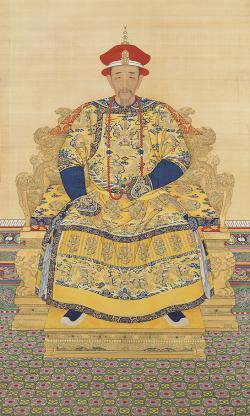
Three Emperors in London
Tuesday, November 01, 2005
On Living: A Point of View
Somehow the realization that nothing was to be hoped for had a salutary effect upon me. For weeks and months, for years, in fact, all my life I had been looking forward to something happening, some intrinsic event that would alter my life, and now suddenly, inspired by the absolute hopelessness of everything. I felt relieved, felt as though a great burden had been lifted from my shoulders. At dawn I parted company with the young Hindu, after touching him for a few francs, enough for a room. Walking toward Montparnasse I decided to let myself drift with the tide, to make not the least resistance to fate, no mater in what form it presented itself. Nothing that had happened to me thus far had been sufficient to destroy me; nothing had been destroyed except my illusions. I myself was intact. The world was intact. Tomorrow there might be a revolution, a plague, an earthquake; tomorrow there might be not be left a single soul to whom one could turn for symphaty, for aid, for faith. It seemed to me that the great calamity had already manifested itself, that I could be no more truly alone than at this very moment. I made up my mind that I would hold on to nothing, that I would expect nothing, that henceforth I would live as an animal, a beast of prey, a rover, a plunderer. Even if war were declared, and it were my lot to go, I would grab the bayonet and plunge it, plunge it up to the hilt. And if rape were the order of the day then rape I would, and with a vengeance. At this very moment, in the quiet dawn of a new day, was not the earth giddy with crime and distress? Had one single element of man’s nature been altered, vitally, fundamentally altered, by the incessant march of history? By what he calls the better part of his nature, man has been betrayed, that is all. At the extreme limits of his spiritual being man finds himself again naked as a savage. When he finds God, as it were, he has been picked clean: he is a skeleton. One must burrow into life again in order to put on flesh. The word must become flesh; the soul thirsts. On whatever crumb my eye fastens, I will pounce and devour. If to live is the paramount thing, then I will live, even if I must become a cannibal. Heretofore I have been trying to save my precious hide, trying to preserve the few pieces of meat that hid my bones. I am done with that. I have reached the limits of endurance. My back is to the wall; I can retreat no further. As far as history goes I am dead. If there is something beyond I shall have to bounce back. I have found God, but he is insufficient. I am only spiritually dead. Physically I am alive. Morally I am free. The world which I have departed is a menagerie. The dawn is breaking on a new world, a jungle world in which the lean spirits roam with sharp claws. If I am a hyena I am a lean and hungry one: I go forth to fatten myself.
Henry Miller, Tropic of Cancer, Harper Perennial, p. 103-104
Henry Miller, Tropic of Cancer, Harper Perennial, p. 103-104
Friday, October 28, 2005
Cruel/Loving Body: Beijing Dis/Embodying
I woke up in the morning, finding a flyer slipped under my apartment door. Beijing,the year is 2004, and the flyer is an advert on some new plastic surgery clinic. That is one of many ways you can greet the day here, the modern capital of the Middle Kingdom. Contemporary Beijingers seem to be obsessed with their looks – plastic surgery clinics mushrooming, penetrating even your private space.
Spas lifestyle finally arrived in this part of the world. On the streets, promo girls push the flyers in your palms. This year alone, China hosted four miss pageant contests, including the Miss World. They will start another one soon, and this will be dedicated to those who went through a plastic surgery. As absurd as it might sound, the latest contest was triggered by a girl who was disqualified in one of previous contests because the jury found out her surgically altered face. She fought back – oddly enough leading to her chance to finally win in the next new contest. Another month witnessed a conference on lingerie productions, including a fashion show of the next season.
Body is now the temple of many Beijingers. This theme moved Wen Hui, a choreographer, staged Report on the Body, a performance by Living Dance Studio, the first independent dance company in China. The troupe had been in Europe for the second round. “I’m amazed with this change. You can find bathhouses or spas almost in every corner. Manicure-pedicure, branded clothes, expensive cosmetics. What’s this all about?” mused Wen Hui. This seemingly newfound bodily obsession is transferred to the stage – unfortunately only had one chance to be performed in front of public in Beijing back in end of 2002, but ironically has been touring throughout several cities in Europe ever since.
Beijing too, the city, can be seen as a ‘body’- constantly undergoing a makeover. This once ancient, imperial capital, has gone through a massive, rapid change in the past few years. Built as if imitating a fortress, with four ring roads circling and bordering, Beijing is so vast and so spread out a space. Construction sites are ubiquitous: apartments, malls, and the so-labelled, ‘New CBD’ – Central Business District. A passionate taxi driver took me to a little tour, a quick glance to his favourite, lovely fangzi (ordinary, traditional Chinese house in the hutong/alleyway area). He has been living for decades in one himself, he said, and he despairs to notice its continuous, alarming disappearance. Experts predict that at least 600 hutong are disappearing every year now, replaced by what the policy makers have in mind.
Now, I find, one of the most delightful things to do in Beijing is to stroll down its old, most ordinary hutong and sample the arguably most charming slice of life of the city. The kind around Jishuitan area (not so far from the lake side where glitzy, night life spot Hou Hai is). It is where life evolves around a few simple things – originally-built fangzi and most still with no toilets (that is why public toilets became a truly Beijing features), small eateries lining up side by side with ‘fake’ barber shops (where girls in blonde-dyed hair waiting for ‘customers’). All in harmony. It’s as if an arena to show what Chinese used to be very good at - the Taoist art of loafing - where guys playing mahjong on the street side, eating spicy meat stick for half cent per piece at a cheap food stall, drinking a bottle of Yanjing beer for only RMB 2 (around Rp 2200). It’s where you can nick delicious mala tang - Sichuan food assortments dipped in yummy sauce, all only RMB 3. The bonus is to get a genuine hospitality from the owners instead of a brisk, baffled fuwuyuan (waiters/ress) at the bigger restaurants. Living is cheap, yet so rich.
Oh, for sure, you also can have a much nicer ‘hutong’-like environment – a line up of newly, stylised-built siheyuan (courtyard house) like the ones right next to the Forbidden City. Re-designed in greyish bricks, these two-story houses are really a bargain compared to those flashy, overpriced, modern apartment. Something in between is the kind around the Central Academy of Drama – a mixture of local feeling (with its surviving moongate and ‘double happiness’ sign on the door on some of its houses), but with trendy cafes and bars classily lurking.
A throughout makeover is indeed on call. Much hassle goes to the deadline of hosting the 2008 Olympics, but other reasons abound to co-exist. The 20 year or so ‘new economy’ put Beijing on the rat race to establish ‘one country two system’ or simply to set the mood of ‘capitalism with a socialist character’ off the ground. It is in a way a snowball of Deng Xiao Ping’s famous cat’s allegory back in the 1970s that ‘it doesn’t matter whether the cat is white or black as long as it catches a mouse’.
Deng, the architect of reform, whose centenary is widely celebrated this year in China, set the credo: ‘to be rich is glorious’. Surviving the odds of Cultural Revolution, China came out perplexed in the 1980s, catching the wind of change in the odder 1990s, now riding the new Millennium full gear of high optimism. It often feels like a déjà vu of being in Southeast Asian during its much-hyped ‘New Asian Tigers’ period in the late 1980s, only in a much more zapping, dizzying pace. Economic growth has been persistently around 7%, and experts raised a pro-contra on overheated issue. Do not rush to quick conclusion though. Many things change, even speed up post joining the WTO, but not as deep as it may look.
Although the China government has just issued a green card procedure for foreigners last August, it was not until 2003 when foreigners were allowed to live in any accommodation (previously confined to certain area and apartment). Export permit for private companies was just recently issued. And the restriction on international publishing will not be lifted until next year (so don’t expect you will find a wide range of English books or magazines for a city as big as Beijing). Some news sites are banned on the net (funny, you can’t log into Time International or Time Asia, but try Time Canada. Voila). And although now MBA students can apply the MacDonald index in their case studies – where you measure people’s buying power against the price of Big Mac price - it does not mean the quality of service in general is predictable or standardized as one can expect in global consumerism. In many cases, the idea of serving ‘customers’ is still a vague one, in contrast to the big campaign of consumption endorsed by the marketing gurus.
On the surface, Beijing seems like any other capital in Asia – vibrant, lively, ‘renao’ (in Chinese). Whilst it preserves the traces of history – temples, palaces, antique tombs – it invents new spots: infamous Sanlitun bar street, idyllic night life at Hou Hai, stylish eateries at Nuren Jie, underground gigs, filmmakers cafes, club life or funky shopping centre at Xidan. It is not as savvy and natural as Shanghai in tapping the global lifestyle; although the coffee cultures finally hit the city of tea houses, it still takes you miles to find a decent one. But scratch the surface, you will likely to find the true soul of contemporary China at its heart.
Compared to Shanghai superficial arts scene, for instance, – where money is the main currency - Beijing offers a genuine dynamic reflected on its range of expressions, practice and level of sophistication. Good and bad, gem and trash arts – all up for grabs. It is hard to imagine a phenomenon like Dashanzi Art District – an ex Bauhaus style factory complex, built by the East Germans in 1950s - happens in Shanghai. Two years ago, it was just a run down area, ready to be demolished. Some artists moved in, in no time it turned to a seemingly organic, trendy complex of art galleries, studio space, cool cafes, restaurants, bars, clubs and boutiques. Now, it’s on the arts world’s map – the rumour of its discontinuation as the contract of many venues will end next year, became the headline of New York Times arts page. Last year, they persisted to organise its first international arts festival, despite the absence of government permit, thus toning down the Opening bash as an act of compromise.
Indeed, this is the moving, beguiling time to be in Beijing. In a quick glance, Shanghainese may be more fluent in English and business, more natural embracing the cosmopolitan culture – now lobbying to build a special between-two-cities ties with London. Guangzhou-ren may be more pursuant of new ideas, but Beijing sets the parameter of progress, where the next wind of change breezes. No doubt, this goes beyond the city’s old charm as a merely site of imperial or socialism memorabilia.
*) this article was published in The Jakara Post, January 2005, but with minor edited words and title rephrased. Here is my original version.
Spas lifestyle finally arrived in this part of the world. On the streets, promo girls push the flyers in your palms. This year alone, China hosted four miss pageant contests, including the Miss World. They will start another one soon, and this will be dedicated to those who went through a plastic surgery. As absurd as it might sound, the latest contest was triggered by a girl who was disqualified in one of previous contests because the jury found out her surgically altered face. She fought back – oddly enough leading to her chance to finally win in the next new contest. Another month witnessed a conference on lingerie productions, including a fashion show of the next season.
Body is now the temple of many Beijingers. This theme moved Wen Hui, a choreographer, staged Report on the Body, a performance by Living Dance Studio, the first independent dance company in China. The troupe had been in Europe for the second round. “I’m amazed with this change. You can find bathhouses or spas almost in every corner. Manicure-pedicure, branded clothes, expensive cosmetics. What’s this all about?” mused Wen Hui. This seemingly newfound bodily obsession is transferred to the stage – unfortunately only had one chance to be performed in front of public in Beijing back in end of 2002, but ironically has been touring throughout several cities in Europe ever since.
Beijing too, the city, can be seen as a ‘body’- constantly undergoing a makeover. This once ancient, imperial capital, has gone through a massive, rapid change in the past few years. Built as if imitating a fortress, with four ring roads circling and bordering, Beijing is so vast and so spread out a space. Construction sites are ubiquitous: apartments, malls, and the so-labelled, ‘New CBD’ – Central Business District. A passionate taxi driver took me to a little tour, a quick glance to his favourite, lovely fangzi (ordinary, traditional Chinese house in the hutong/alleyway area). He has been living for decades in one himself, he said, and he despairs to notice its continuous, alarming disappearance. Experts predict that at least 600 hutong are disappearing every year now, replaced by what the policy makers have in mind.
Now, I find, one of the most delightful things to do in Beijing is to stroll down its old, most ordinary hutong and sample the arguably most charming slice of life of the city. The kind around Jishuitan area (not so far from the lake side where glitzy, night life spot Hou Hai is). It is where life evolves around a few simple things – originally-built fangzi and most still with no toilets (that is why public toilets became a truly Beijing features), small eateries lining up side by side with ‘fake’ barber shops (where girls in blonde-dyed hair waiting for ‘customers’). All in harmony. It’s as if an arena to show what Chinese used to be very good at - the Taoist art of loafing - where guys playing mahjong on the street side, eating spicy meat stick for half cent per piece at a cheap food stall, drinking a bottle of Yanjing beer for only RMB 2 (around Rp 2200). It’s where you can nick delicious mala tang - Sichuan food assortments dipped in yummy sauce, all only RMB 3. The bonus is to get a genuine hospitality from the owners instead of a brisk, baffled fuwuyuan (waiters/ress) at the bigger restaurants. Living is cheap, yet so rich.
Oh, for sure, you also can have a much nicer ‘hutong’-like environment – a line up of newly, stylised-built siheyuan (courtyard house) like the ones right next to the Forbidden City. Re-designed in greyish bricks, these two-story houses are really a bargain compared to those flashy, overpriced, modern apartment. Something in between is the kind around the Central Academy of Drama – a mixture of local feeling (with its surviving moongate and ‘double happiness’ sign on the door on some of its houses), but with trendy cafes and bars classily lurking.
A throughout makeover is indeed on call. Much hassle goes to the deadline of hosting the 2008 Olympics, but other reasons abound to co-exist. The 20 year or so ‘new economy’ put Beijing on the rat race to establish ‘one country two system’ or simply to set the mood of ‘capitalism with a socialist character’ off the ground. It is in a way a snowball of Deng Xiao Ping’s famous cat’s allegory back in the 1970s that ‘it doesn’t matter whether the cat is white or black as long as it catches a mouse’.
Deng, the architect of reform, whose centenary is widely celebrated this year in China, set the credo: ‘to be rich is glorious’. Surviving the odds of Cultural Revolution, China came out perplexed in the 1980s, catching the wind of change in the odder 1990s, now riding the new Millennium full gear of high optimism. It often feels like a déjà vu of being in Southeast Asian during its much-hyped ‘New Asian Tigers’ period in the late 1980s, only in a much more zapping, dizzying pace. Economic growth has been persistently around 7%, and experts raised a pro-contra on overheated issue. Do not rush to quick conclusion though. Many things change, even speed up post joining the WTO, but not as deep as it may look.
Although the China government has just issued a green card procedure for foreigners last August, it was not until 2003 when foreigners were allowed to live in any accommodation (previously confined to certain area and apartment). Export permit for private companies was just recently issued. And the restriction on international publishing will not be lifted until next year (so don’t expect you will find a wide range of English books or magazines for a city as big as Beijing). Some news sites are banned on the net (funny, you can’t log into Time International or Time Asia, but try Time Canada. Voila). And although now MBA students can apply the MacDonald index in their case studies – where you measure people’s buying power against the price of Big Mac price - it does not mean the quality of service in general is predictable or standardized as one can expect in global consumerism. In many cases, the idea of serving ‘customers’ is still a vague one, in contrast to the big campaign of consumption endorsed by the marketing gurus.
On the surface, Beijing seems like any other capital in Asia – vibrant, lively, ‘renao’ (in Chinese). Whilst it preserves the traces of history – temples, palaces, antique tombs – it invents new spots: infamous Sanlitun bar street, idyllic night life at Hou Hai, stylish eateries at Nuren Jie, underground gigs, filmmakers cafes, club life or funky shopping centre at Xidan. It is not as savvy and natural as Shanghai in tapping the global lifestyle; although the coffee cultures finally hit the city of tea houses, it still takes you miles to find a decent one. But scratch the surface, you will likely to find the true soul of contemporary China at its heart.
Compared to Shanghai superficial arts scene, for instance, – where money is the main currency - Beijing offers a genuine dynamic reflected on its range of expressions, practice and level of sophistication. Good and bad, gem and trash arts – all up for grabs. It is hard to imagine a phenomenon like Dashanzi Art District – an ex Bauhaus style factory complex, built by the East Germans in 1950s - happens in Shanghai. Two years ago, it was just a run down area, ready to be demolished. Some artists moved in, in no time it turned to a seemingly organic, trendy complex of art galleries, studio space, cool cafes, restaurants, bars, clubs and boutiques. Now, it’s on the arts world’s map – the rumour of its discontinuation as the contract of many venues will end next year, became the headline of New York Times arts page. Last year, they persisted to organise its first international arts festival, despite the absence of government permit, thus toning down the Opening bash as an act of compromise.
Indeed, this is the moving, beguiling time to be in Beijing. In a quick glance, Shanghainese may be more fluent in English and business, more natural embracing the cosmopolitan culture – now lobbying to build a special between-two-cities ties with London. Guangzhou-ren may be more pursuant of new ideas, but Beijing sets the parameter of progress, where the next wind of change breezes. No doubt, this goes beyond the city’s old charm as a merely site of imperial or socialism memorabilia.
*) this article was published in The Jakara Post, January 2005, but with minor edited words and title rephrased. Here is my original version.
Subscribe to:
Posts (Atom)